Protein design · Machine learning · Antibodies · TCR-pMHC
Leonardo V. Castorina
Senior Protein Dreamer @ Apheris
About

I love proteins. I'm most interested in representation: how do you describe proteins so that models can reason about them without drowning in complexity? This question drove most of my work during my PhD with PDBench, TIMED-Design, and Tessera.
Today, that question pushes me to navigate the immune system and build models to design the cures of the future.
Experience

Senior ML Engineer – Large Molecules
Jun 2026 → presentApheris
- Building the next generation of federated AI models for antibodies.

Senior Research Scientist
Apr 2025 – May 2026AstraZeneca
- Performed de novo design and optimisation on five targets for affinity, cross-reactivity and developability.
- Engineered biochemically interpretable statistical models for multispecific antibody pairing.
- Designed geometric representations for rapid off-target and interaction screening.
Alongside the PhD

ML Consultant
Nov 2024 – Feb 2025NEC OncoImmunity
- Developed a vaccine design pipeline yielding potent candidates for cancer and infectious disease.

ML Consultant
Nov 2023 – Apr 2024Microsoft Research
- Developed a statistical framework to analyse sequence variance in the context of TCR repertoires.
- Mapped sequence polymorphisms to 3D structural features to disentangle interaction drivers.
Research Scientist Intern
Jun 2023 – Sep 2023Microsoft Research
- Mined 30K TCR repertoires with MHC and peptide data to identify key interaction patterns.
Education
The University of Edinburgh
- PhD, Machine Learning for Protein Design2021–2025
- MScR, Artificial Intelligence2020–2021
- BSc (Hons), Biochemistry2016–2020
Selected papers
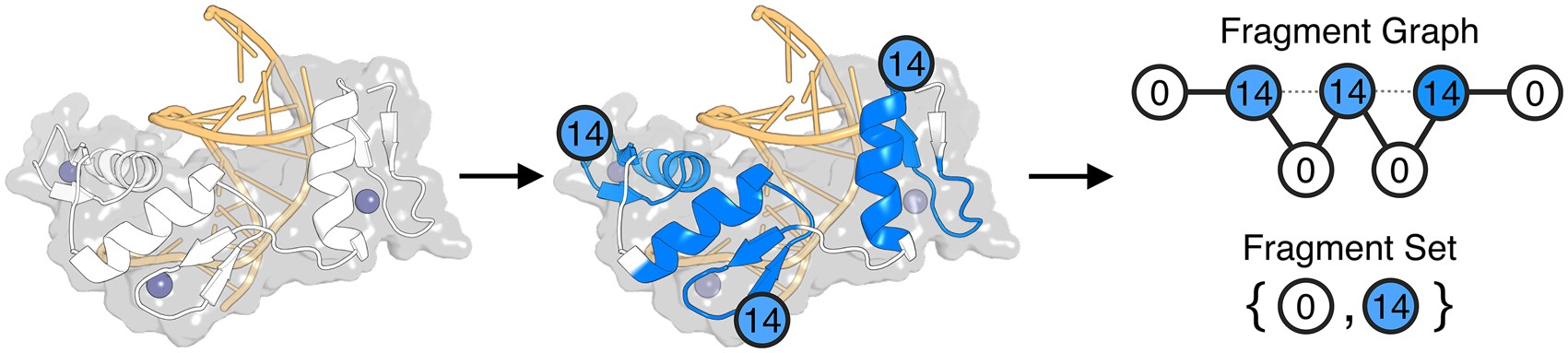
From Atoms to Fragments: A Coarse Representation for Efficient and Functional Protein Design
A coarse representation of protein structures based on a set of conserved ancient fragments rather than individual atoms, scaling sub-linearly with chain length while keeping the functional geometry. Used to condition RFDiffusion on function and to search functional sites up to 68× faster, with better functional clustering than sequence- and structure-based methods.
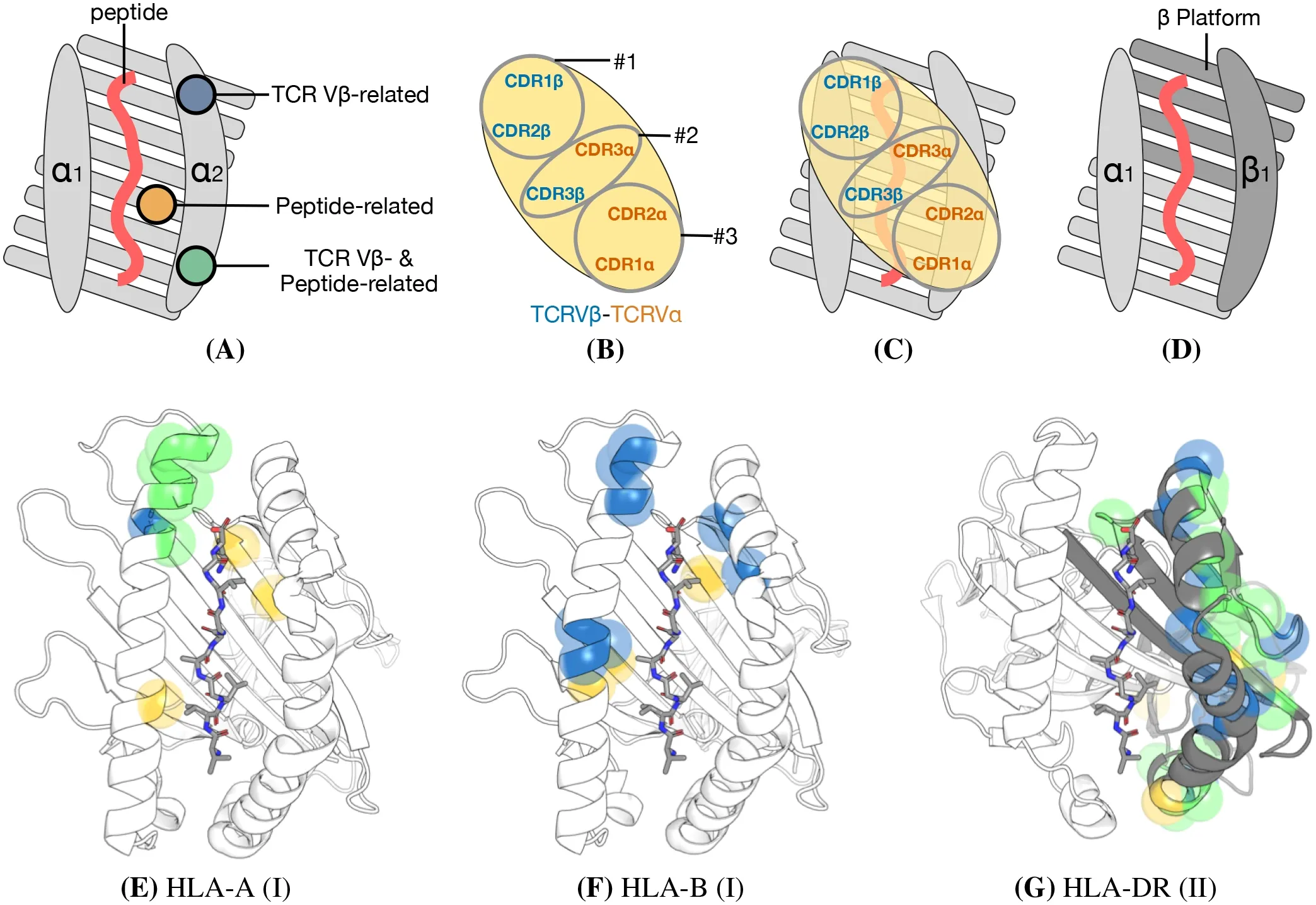
HLA Alleles Shape Distinct Biases in the Usage Preferences of TCR Vβ Segments
TCR Vβ usage varies with HLA genotype. Across tens of thousands of repertoires paired with HLA typing, each HLA shows a distinct bias towards TRBV segments and peptide motifs. We statistically break down this bias, per position of the HLA.
Crowdsourced Protein Design: Lessons From the Adaptyv EGFR Binder Competition
A retrospective on the 2024 Adaptyv EGFR binder competition. Over 1,800 crowdsourced de novo designs were submitted, of which 601 were expressed and measured by bio-layer interferometry, to benchmark diverse in silico scoring strategies against a unified wet-lab dataset.
Full list on Google Scholar.
Writing & talks
Talks and articles on protein design, and on keeping a PhD's worth of notes in order.
Science
AI in Healthcare: The Next Frontier Where AI actually helps in healthcare, from retinal imaging to protein design, and what we still haven't answered about it. How to Solve the Protein Folding Problem: AlphaFold 2 A visual walkthrough of AlphaFold 2: what each layer does, and why the tensors are shaped the way they are. Medium Boost Award How to Create a Protein A short course for high school students designing their first protein.Obsidian
How to Boost Your Productivity for Scientific Research Using Obsidian The system I ran my PhD on: zettelkasten, projects, reading lists and references in a single vault. Obsidian October 2022 – Written Content Obsidian Tutorial for Academic Writing Taking a paper from scattered reading notes to a finished manuscript, citations and figures included, without leaving the vault.More writing on Medium.